
Pixel Policy for Jusha Medical Monitors
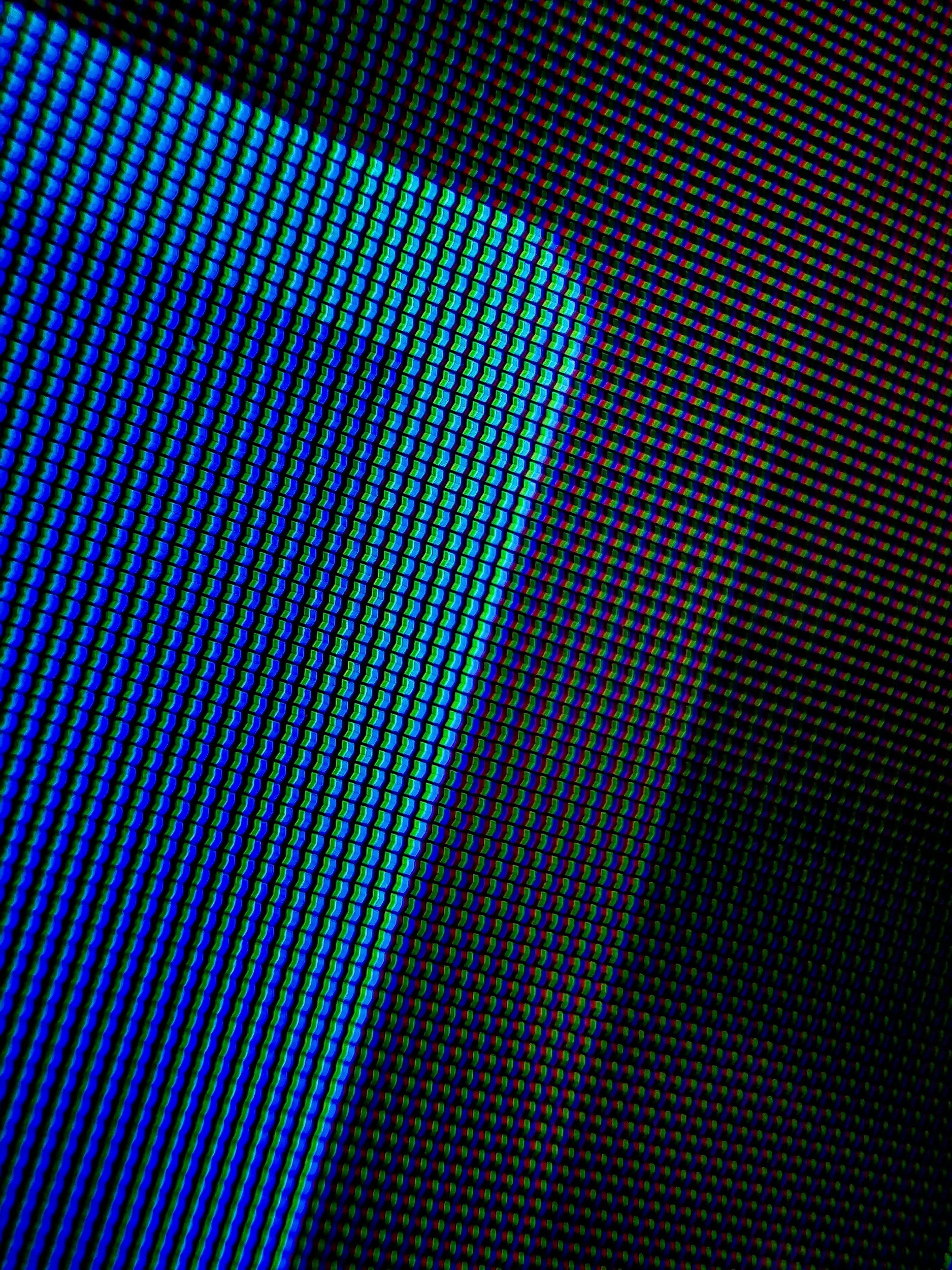
Each display panel contains millions of microscopic pixels, and achieving a 100% pixel-perfect panel is technically impossible. IEC 62563-2 defines pixel fault classifications and tolerance limits for medical monitors, ensuring reliable image quality while reflecting the realities of advanced panel manufacturing. Jusha would always provide you the best service beyond the industry standard.
Warranty Introduction
Jusha is committed to providing reliable product quality and professional after-sales support. All eligible product support, inspection, repair, or replacement services are provided free of charge within the valid warranty period, subject to Jusha warranty terms and applicable service policy.
For any suspected pixel fault or monitor quality issue, customers should first contact their local Jusha sales representative or authorized distributor. The local team will conduct the initial investigation, collect the required information, and help determine whether the issue falls within the applicable IEC 62563-2 standard and warranty coverage.
If the monitor is confirmed to exceed the pixel fault tolerance defined by IEC 62563-2 for its product category, Jusha Medical will provide appropriate support in accordance with the warranty policy.
The applicable pixel fault criteria are summarized below:
| IEC 62563-2 Category | Typical Use | Pixel Fault Tolerance |
|---|---|---|
| Category I-A |
Mammography / DBT diagnostic display |
≤ 1 Type A pixel fault per megapixel |
| Category I-B | General diagnostic display | ≤ 3 Type A pixel faults per megapixel |
| Category II / III |
Clinical review and reference displays |
Evaluated according to the applicable requirements of IEC 62563-2 |
Types of Pixel Faults
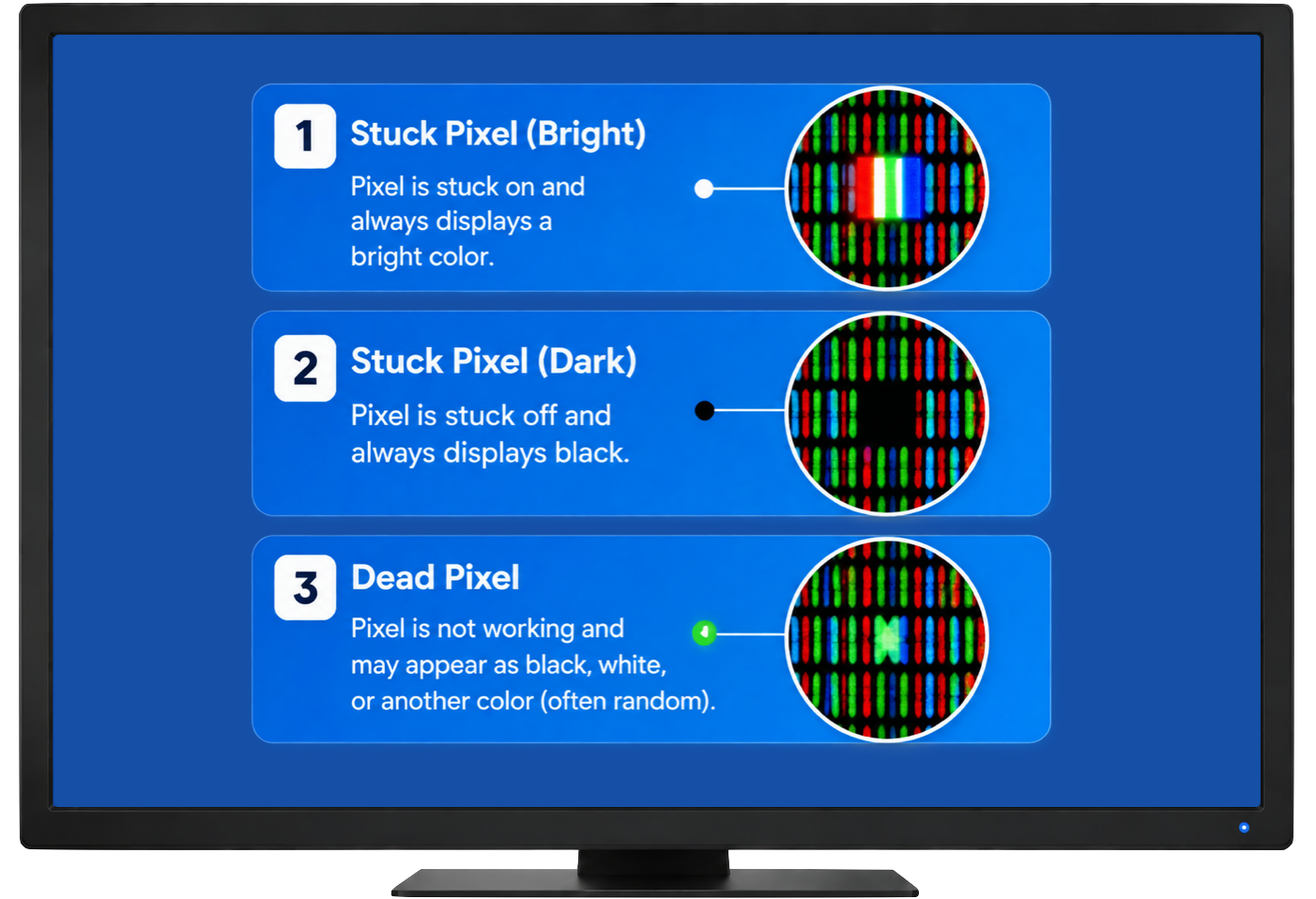
1. Stuck Pixel (Bright)
A stuck bright pixel occurs when a subpixel remains permanently on, causing a constant red, green, blue, or white dot regardless of the displayed image. It is usually caused by a transistor failure. These pixels are most noticeable on dark backgrounds and may sometimes recover through pixel-refreshing methods, but many remain permanently defective.
2. Stuck Pixel (Dark)
A stuck dark pixel occurs when a subpixel remains permanently off, creating a dark spot that does not change with the image. It is often caused by a transistor failure blocking light transmission and is more visible on bright backgrounds. Unlike bright stuck pixels, it is rarely fixed by software methods.
3. Dead Pixel
A dead pixel is a complete pixel failure where all RGB subpixels stop working. It usually appears as a black dot but may also show other fixed colors depending on the failure mode. Caused by manufacturing defects, physical damage, or electrical failure, dead pixels are considered the most serious pixel defect.
Scope of Support
If a monitor exhibits pixel defects that exceed the limits specified for its applicable IEC 62563-2 category, Jusha will provide appropriate technical support, including inspection, repair, or replacement, in accordance with the product warranty and service policy.
By adopting the IEC 62563-2 standard, Jusha Medical ensures that all pixel fault evaluations are performed using internationally accepted criteria, providing customers with a fair, transparent, and clinically relevant assessment of display quality.
Contact
If you are buying directly from Jusha, contact your sales representative.
If you are buying from a reseller, contact them first.
For all other procurement, please email to: info@jusha.com.au